
Freethought
TLDR: Free speech, which should be reframed as freedom to listen, is founded on freethought. Speech rights are a local issue, and mostly cultural, rather than legal. Utopia protects children from indoctrination by establishing a right to access a library of canonical texts.
Prerequisites: Technically none, though I build on many previous ideas, especially Advertising and Surveillance.
“If a man will begin with certainties, he shall end in doubts;
but if he will be content to begin with doubts, he shall end in certainties.”
—Francis Bacon (1605) The Advancement of Learning, Book 1, v, 8
One of the most important ideas in all of human history — perhaps the most important idea — is “the beliefs, aesthetics, and worldview of a person should be cultivated through contact with reason and evidence, not on the basis of authority, tradition, superstition, or dogma.” In other words: it is good to be a freethinker.
Freethought is so centrally important because:
Its fundamental nature makes it relevant to nearly everyone. Even young children can learn to notice an argument from authority and distinguish it from something that makes sense according to their own perspective.1
It is causally upstream of a huge number of healthy practices and principles. Freethought turns the mind in on itself, seeking a solid foundation for ideas, and leaving people hungry for methodology and rigor.
It is so rarely the norm. Bias and lazy thinking seep into even the most careful thinkers and societies. Where and when freethought fades out, humility and collaborative truth seeking go with it, leading to dominance contests and tribalism.
The track record of freethought should be obvious; science is a project of freethought, explicitly developed by freethinkers; liberalism and the associated progress in civil rights have the same pedigree. Transformative progress stems, at least at first, from individuals willing to stray from the dogma of their societies and chart new paths. Tyranny is founded on its absence. And when the spirit of progress turns into revolutionary fire and bloodshed, whether in France or Russia or China, freethinkers stand against the tide, holding onto the truth even at great social peril.
Most of my focus in this essay will be on free speech. This is because thinking, in practice, is rarely a purely private activity. We think through speech — in conversation with those we are close with, in writing out our perspectives, and even in the back-and-forth dialectic with those who see things differently.
It is in the arena of speech rights where freethought often faces its sharpest challenge.2 Those who wish to control beliefs begin by restricting what can be said, written, or heard. Speech is the exposed surface of thought, and so it is where power presses hardest.
But just as freethought cannot thrive without free speech, the project of navigating the various edge-cases of free speech is lost without freethought as a guide. It grounds the defense of expression in something deeper than procedural liberalism and provides a way to navigate the genuinely hard cases where an unreflective defense of free speech can, ironically, become dogma that undermines the inquiry it was meant to protect.
Words and Deeds
Certain things should not be said. Indeed, certain ideas should not be entertained. Pernicious falsehoods, like the notion that standard vaccines are dangerous,3 can spread like wildfire and prove nearly impossible to overcome. Even private thoughts can cause harm—coveting your neighbor’s wife is the sort of thing that leads to trouble, even when the trouble is merely an unnecessary “second arrow” of suffering in the mind of the coveter. The impulse to control speech and thought is a response to real problems.
But even granting that some speech causes harm, suppression is remarkably difficult, especially when speech is most potent. We can see this in the problem of organized crime: imprisonment can prevent a boss from personally committing crimes, but his orders still travel through the prison walls. Indeed, if speech were truly controllable, tyranny might have swallowed the world long ago.4 When certain topics are made taboo, the mind learns to speak in codes and innuendos.
Thoughts are even harder to stop. Even when someone, at a conscious level, wants very much to avoid thinking about something, it can be a struggle to avoid fixating on it. Indeed, the deliberate suppression of thoughts — and words — can perversely make them more likely to occur.
The key property that makes thoughts and words so difficult to suppress is that it’s impossible to determine whether they are permissible in advance of them being generated. We obviously don’t want to suppress all speech, but the boundary between acceptable and unacceptable speech is impossibly complex and constantly shifting. An idea which is harmless on Monday may become toxic on Tuesday, so there is almost nothing that can be done except impose arbitrary and inconsistent punishments on speakers retroactively.
Actions are usually different.5 It is not hard, in advance, to know whether breaking into someone’s house to steal their stuff is an act that society should allow.6 And, when armed with the capacity to think things through and discuss them in a free manner, we can be increasingly confident that rule-breakers have knowingly gone against society. By cleaving to clear principles and setting bright lines, we become civilized.
Reality is not made of discrete categories. Some actions are more like thoughts, and some speech is more like taking an action.
Are there any clear principles that we can use to set a bright line around certain forms of speech that are particularly bad? Yes! And it is precisely the action-like forms of speech — as opposed to the thought-like forms of speech — where it is possible. Spamming, non-consensual advertising, and harassment do not facilitate freethought; they are a form of attack. Doxxing and otherwise violating people’s privacy likewise make it harder for everyone to speak freely and discuss things in a relaxed way. In each of these cases there is work that needs to be done to figure out exactly where to draw the line, but it seems clearly better for the sake of freethought (and general quality of life) to draw a line somewhere.7
The Right to Listen
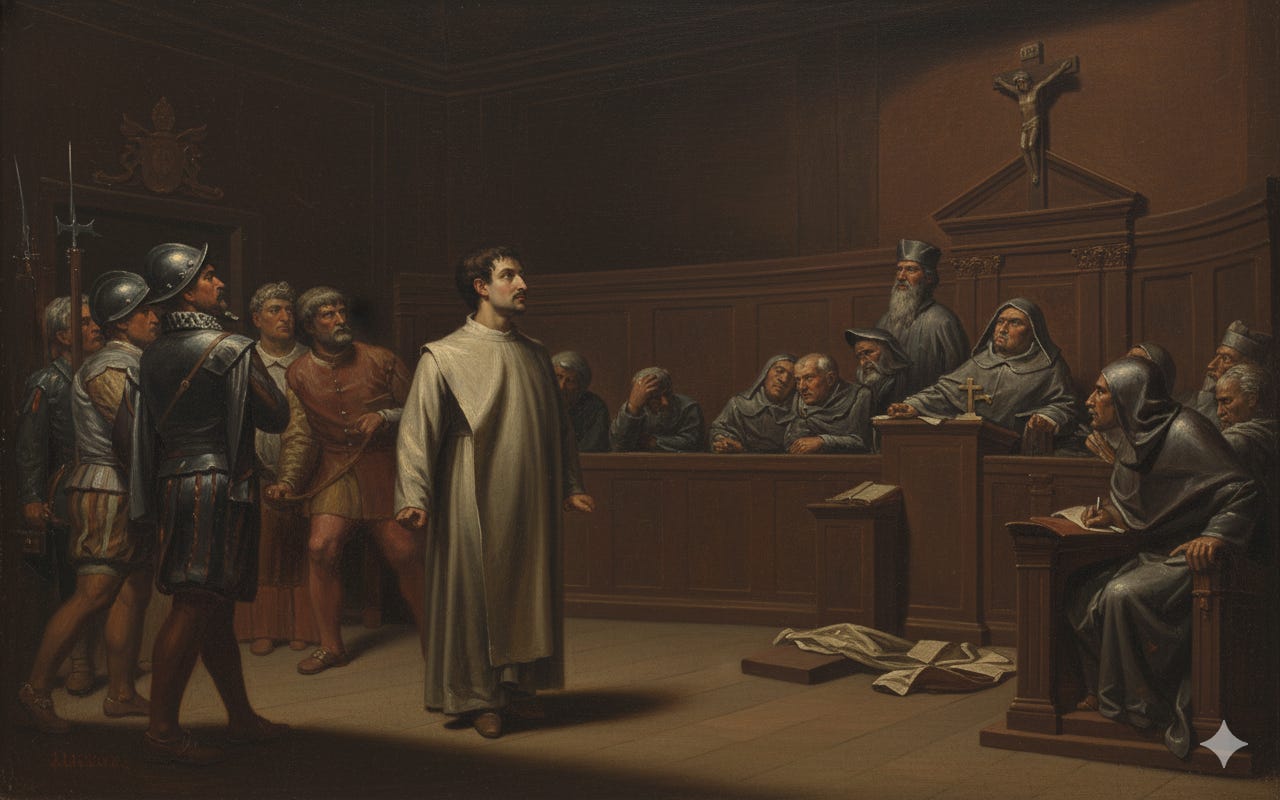
The standard framing of free speech centers on the speaker: I have the right to voice my dissent. But when the Catholic Church maintained its list of banned books, the Index Librorum Prohibitorum (only abolished in 1966!), the primary victims were not the authors, most long dead, but those who were denied the opportunity to read these works and decide for themselves what to believe.
This reframing is crucial. If we focus on the speaker, we end up debating who “deserves” a platform. And when the censor can cherry-pick the worst of the worst, it’s hard to stand up in their defense. But if we focus instead on the listener, the question becomes: are you sure they don’t benefit from being able to hear?
But the listener-centered framing raises the obvious objection: not all listeners are well equipped to engage with everything that people want to say. Children are not just harmed by some pornography8 and graphic violence, but also by some “pure ideas” such as the prospect of an eternal hell. Adults, too, can fall prey to conspiracy theories and religions that produce “trapped priors,” immunizing themselves against counterevidence. Misinformation often spreads faster than corrections, being built on exciting and outrageous lies instead of boring, nuanced truths.
The Church understood this well. The Index was not titled “Books We Forbid You to Write” but “Books We Forbid You to Read.” Censorship targeted listeners, not speakers—and this was no Catholic peculiarity. The consensus across nearly all societies, until quite recently, was that ordinary people could not be trusted to encounter dangerous ideas.
While the free speech absolutist might wish for a total absence of regulations or restrictions, dogmatic adherence to freedom can simply lead to people being imprisoned in a subtler way, adrift on an ocean of confusion and lies. And yet, if we deem ourselves benevolent protectors — whether government censors, social media policy execs, or simple parents — are we not giving up on the very foundation of freethought?
To take the high road, and avoid either kind of failure, we must adopt better methods. Consider Community Notes as a starting point. When someone goes on Twitter/𝕏 and posts something wrong, other members can augment that bit of writing by providing a correction and/or additional context. Thanks to some algorithmic magic behind the scenes, the note that is most unobjectionable and well-sourced will get the spotlight.
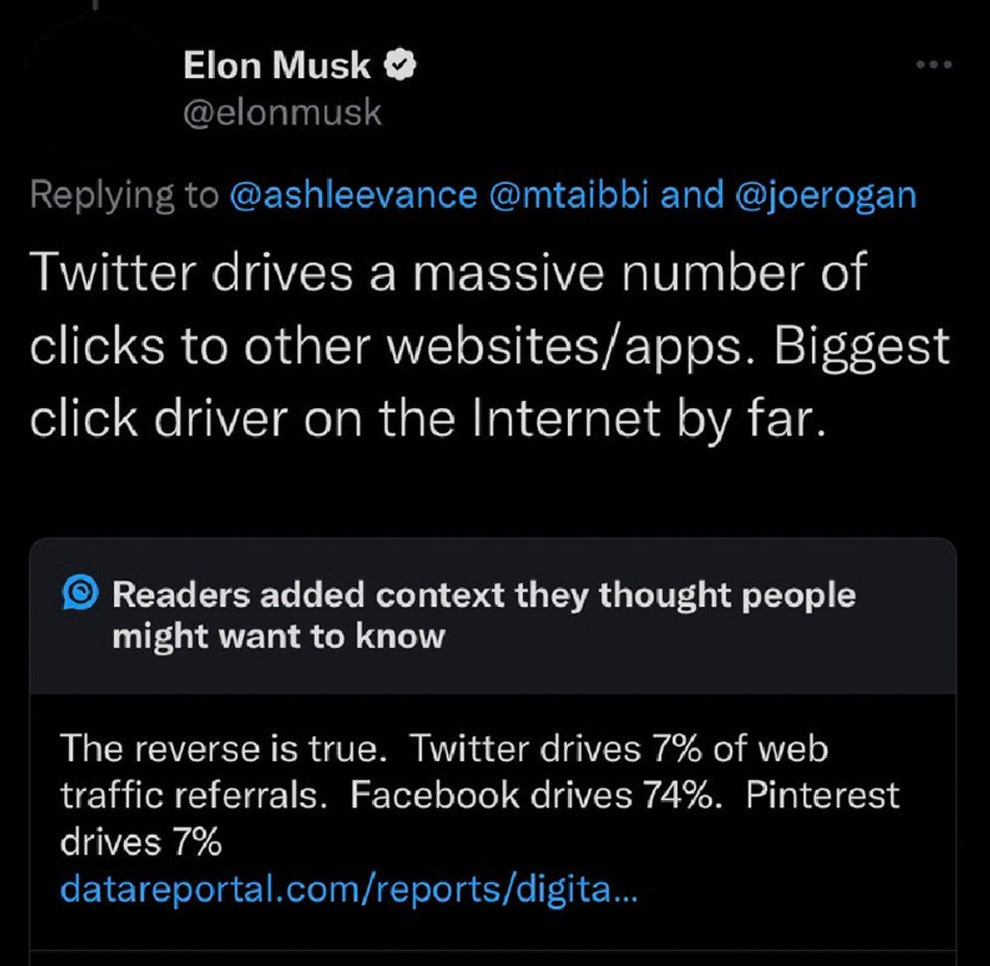
Community Notes isn’t perfect, but it exemplifies the principle of augmentation over suppression, sometimes known as the counterspeech doctrine. On a level playing field, “fight bad speech with better speech” can be a naive strategy — it takes far more work to clean up a mess than to make one. But with clever design decisions, like those seen in Wikipedia and Polis, we can make it easy to selectively highlight and amplify accurate content that builds bridges towards consensus. By making these platforms the strong default, but not a strict monopoly, we can cultivate wisdom while also empowering people to listen to whomever they want.9
For the listener, being able to explore the ideas of others without fear or punishment is vital, even if those ideas are wrong or illiberal. Engaging with compelling falsehoods in good faith, when someone is ready, is one of the best ways of learning to notice that irrationality is not a problem of dumb crackpots, but an endemic and pervasive risk to all people. No authority can teach the skill of being skeptical of authority. By its own lights, the love of freedom must be earned organically.
Utopian Freedom of Speech
Utopia has a strong norm of keeping almost all laws that govern speech, either protecting it or censoring it, out of the hands of the world government, and firmly at the local level. There are places in Utopia where people are not allowed to speak out in various ways, such as committing blasphemy. Such pockets of strong authoritarianism are rare, but almost all local governments have restrictions on advertising, publishing photos of someone without their consent, and on who can access what kinds of sexual media. Somewhere in between, in terms of frequency, are places that restrict access to ideas and thinkers that are considered to be harmful for one reason or another. Almost all these restrictions, however, are mediated by licenses — people are allowed to opt-in to things that could hurt them as long as they can prove that they’re competent enough to navigate the risks.
Strengthening the freedom of individuals, the world government does protect the right to emigrate. If a citizen finds their local government too censorious, and wants to have a taste of what has been forbidden, they only need to leave and go to a place where no such prohibitions exist, including by buying their land from the country that formerly held it and thereby seceding (perhaps with a few of their neighbors), or by traveling out into the many unincorporated spaces.
The one major gap and exception to the world government’s hands-off policy is the indoctrination of children. While children theoretically have the power to travel and even secretly request being adopted by new guardians, they rarely exercise these rights, even when oppressed, due to not having enough knowledge and experience to understand the alternatives or the magnitude of the abuse. Because of this, Utopia protects freethought, in the young and the old, by establishing a universal right to library access.
The futarchy is in charge of choosing the civilizational canon: a set of 1296 books, written in the global language. Once a book is chosen, it has a shelf-life of 60466176 rests, or about 587 years, during which it cannot be removed from the canon, even by a government backed by a supermajority of the populace. Only once its time is up does the futarchy select a book to take its place, perhaps re-selecting that same text to have another tenure. Despite the long timeframe, due to the number of books in the canon, a book is updated roughly every 165 days.
The right to library access involves being able to not only lay hands on any of the canon texts within no more than a ride’s distance10 (~55 km) and a visit’s wait-time11 (~3 hours), but also to learn the global language (both by accessing learning materials at a library, and by speaking with the librarians) and to be able to spend at least 1/36th of one’s life alone in the privacy of a library room, with no one watching to see what is being read. Most Utopian libraries have more than the canon texts, of course, and the shape and nature of such libraries varies greatly from place to place. Many Utopian police and fire stations are libraries, as are most churches, schools, and hospitals. For the Utopians, libraries are something of a sacred space — a place to recognize and honor the power of ideas and the freedom to read the words of one’s ancestors.
On the whole, Utopia stands as a place with vastly more freedom of expression. There are no globally enforced copyrights, thanks to prize-based funding of public goods. There aren’t even universal laws about publishing materials that are near-universally regarded as obscene or dangerous, such as instructions for producing engineered plagues or other weapons of mass destruction. Instead, Utopian law enforcement strives to use above-board methods to notice who is putting out such materials and charge them for criminal actions.
Utopian Freethought
More broadly, Utopia sees the laws around freedom of speech less important than the underlying culture. It doesn’t matter whether you’re legally allowed to give your thoughts a voice if the people around you will condemn you for it. Utopian culture thus celebrates the influence of freethinkers and emphasizes that it is honorable and good to speak falsehoods, as long as they are genuinely believed and one shows good-faith and openness when they’re challenged. We all have been seriously wrong at one time or another, and giving a voice to those wrong thoughts is the first step towards changing one’s mind for the better.
This culture of fallibility is an antidote to the brittle tightness of authority. Experts, politicians, and celebrities in Utopia will often make a big deal out of big ways that they’ve been wrong and have changed their minds. Being a devil’s advocate is encouraged, as is admitting ignorance or confusion, when appropriate. Utopians tend to judge intellectual impressiveness on the basis of rational validity and clarity, rather than on which particular positions someone espouses.
Much like our world, internet-based media, both social and professional, is the “town square” in which ideas are usually debated. The serious people of various Utopian institutions (including, but not limited to, local governments) cultivate freethought in these spaces by offering prizes to the platform-builders who prioritize open algorithms with strong defaults that encourage social harmony and truth, often by providing decentralized ways for society to augment bad content with corrections. And thanks to various government standards, the software that people use to explore and engage with the world of ideas can easily be customized to match their needs and avoid monoculture.

And most children are also fully capable of understanding that things aren’t always as they seem on the surface, and that they will often need to make the meta-level judgment of who to trust. They won’t always get this right, of course, but the core principle is hardly beyond reach.
The other noteworthy realm of oppressing freethought is via surveillance, which I am also against (except in well-marked public spaces, and with constraints on the watchers).
To be clear, all vaccines are dangerous to some degree, as are virtually all medical interventions. Taking aspirin can lead to serious side effects! A numerate person will recognize that the real question is how dangerous, and whether the net effect is positive, in expectation.
The core problem with vaccines is that the risk from the disease depends on environment. For example, the ACAM2000 smallpox vaccine, one of the most dangerous, is still reasonably safe, with serious complication rate of ~0.5%. But thanks to the eradication of smallpox, the risks from the disease are virtually non-existent, making getting this vaccine a clearly bad choice (outside of some weird edge cases).
In Japan between 2020 and 2023 there were a total of 50 reported cases of measles. Since approximately 1/5 people who get measles are hospitalized, and the population of Japan is approximately ~125 million, the annual hospitalization risk is approximately one in fifty million. By contrast, the hospitalization rate from the MMR vaccine is conservatively closer to one in thirty thousand (usually from Immune Thrombocytopenia) — over a thousand times more likely. Even if we take the annual rate and multiply it across an entire lifetime, this math indicates that the vaccine is more dangerous than measles.
But this math is super misleading. First because MMR protects against mumps and rubella, as well as measles. (In Japan, rubella levels are extremely low, similar to measles. Mumps on the other hand, causes many hundreds of thousands of cases per year in Japan. Mumps hospitalizes ~15% of unvaccinated adults who contract it, but vaccination reduces hospitalization rate by ~70%. Why is mumps so common in Japan? Because Japan doesn’t use the MMR vaccine — it was withdrawn from the national immunization program in 1993 because of fears of rare complications in favor of a vaccine that only covers measles and rubella! Oops!)
But more notably, the period between 2020 and 2023 had particularly low levels of measles due to covid lockdowns. By contrast to the ~10 cases/year post-pandemic, there were 745 cases of measles in Japan in 2019, and in many Western countries where vaccine skepticism is more prevalent, measles outbreaks are even worse. The very thing that makes it safe to (theoretically) not take health precautions is taking health precautions!
Even in the occasional instances where it is safer for the individual to use herd immunity to free-ride without having to personally get vaccinated, it’s still clearly in their health interest to have nearly everyone else get vaccinated! Vaccines and antibiotics are the two most important civilizational tools for combatting disease, and are extremely clearly good for the safety of everyone (even if there are rare cases of people with health conditions who shouldn’t personally get vaccinated).
One of the most worrying possible future technologies, in my opinion, is mind reading. In principle, nothing prevents a machine from scanning someone’s mind and reporting whether they are a loyal, true believer. With this tech in hand, it seems plausible that authoritarian states could achieve near-permanent lock-in.
(It seems most likely to me that mind-reading tech will first emerge as a way of controlling artificial intelligences, but technologies like Neuralink and fMRI hint at what a similar capacity might look like for human brains.)
Possible exceptions include experiments. While it’s usually possible to identify the range or space of possible outcomes, by the very nature of experiment it’s not possible to confidently predict how things will turn out. Restricting experiments based on obvious physical consequences (e.g. harming someone) might make sense, but trying to prohibit experiments that provide evidence for an idea is just as foolish as trying to prohibit arguing for that idea.
It’s not hard to predict whether to allow theft… unless you subscribe to a particular form of consequentialist ethics which says that it’s fine to steal if, by stealing, you make the world a better place. The inability for this kind of consequentialism to know in-advance what is good and what is bad, is the main reason it is an unworkable ethics, in practice.
Are there any instances of thoughts that are closer to actions, such that we might deem those thoughts to be worth criminalizing? Here we enter a realm that I am deeply uncertain about, but my guess is yes. In particular, I can imagine that digital people could exist, such that an advanced AI system might “richly imagine” the suffering of people, and be harming moral patients as a result. My best guess is that this sort of simulation is well beyond the capacity of human beings — daydreaming about someone being tortured does not have the same moral import as a supercomputer running a simulation of them being tortured — but I don’t know where the line is. Hopefully there are smart people in the future who will figure this out and come up with non-dystopian ways to prevent thoughtcrime.
Not all sexual content is harmful to minors, of course, especially teenagers. Much like a wise society provides healthy and effective default social media platforms that are optimized according to public good rather than advertising revenue, it seems clear to me that a wise society provides relatively easy access to sexual content that’s deliberately shaped to emphasize realism and wholesomeness, rather than to sell fantasies to desensitized adults.
My sense is that most places in Utopia restrict access to adult content in multiple stages. Young children can get access to basic sexual education content with only a check that they’re reasonably aware of what’s happening and are genuinely curious, to strongly nudge them into asking their parents/guardians for assistance and generally prevent inadvertently stumbling into something that they can’t contextualize. Then, for those going through puberty and early teen years, having some free, high-quality, wholesome erotic content (mostly stories?) “hidden” on the internet behind nontrivial puzzles that verify the viewer has a basic understanding of sex and is mature enough to handle it. Finally, general porn is accessible to those who have earned a license by demonstrating that they clearly understand that most porn isn’t realistic and can be subtly harmful; licenses are anonymously checked via automated systems.
Regardless, I think it’s important to keep the restrictions and power over these sorts of things in local hands, rather than assuming that someone in California should have the power to dictate how things go in New York, much less in China.
On a related topic, I think it’s reasonable to see pornography as something that a local government can ban and restrict without worrying about the impact on freethought, since it’s more of an action-like “speech”, and not usually very thought-like. It is more like music, and less like a political debate. Unfortunately, there’s no sharp divide, and we return to the problem of fitting an impossibly complex and constantly shifting boundary.
I ultimately reject the project of trying to sort through erotic content to determine what’s artistically worth protecting and what is unthinking smut. If a society doesn’t protect dumb porn with as much fervor as it protects political erotica that shows up as part of a video manifesto, that society will soon find itself awash in “manifesto” videos that are full of dumb porn, making the porn worse and the good political manifestos harder to find.
The framing of free speech as mostly being about the right of the listener is a big part of why I don’t like the slogan “freedom of speech, not freedom of reach,” which is commonly used when discussing why removing people from specific platforms (eg banning Donald Trump from Twitter in 2021) is not a form of censorship. If my ability to listen to someone is decreased, they are being censored, even if technically they can still speak to smaller crowds or whatever. I think it is entirely reasonable to have an open algorithm that emphasizes good content (and thus minimizes bad content), as long as the listener has easy capacity to deliberately opt-in to listening to someone whom society has labeled “bad.”
While this is quite distant, from the perspective of a small child on foot, it is worth noting that guardians are expected to provide transportation to and from libraries as part of their duties. Children who report wanting to spend time at the library but being unable to (or, after a certain age, who report never having visited a library at all) are so likely to be re-assigned to new guardians that parents across the world tend to make regular library visits a Big Deal. “My parents used to drag me to the library nearly every week!” is a shared point of childhood culture that’s common across Utopia.
The requirement to have a library within a ride of every place of permanent residence is one of the most restrictive constraints imposed by the world government. It means there must be a library on board all space-stations. It means there must be libraries on remote islands. It even means that non-human people, such as gorillas, must have a library reasonably close to their homes in the wilderness. Travelers and explorers, including dolphins and other non-humans that do not tend to reside in a specific place, are allowed to not always have access to a nearby library (though they must still have the freedom to travel to one, if they choose).
In practice this means libraries never close, though some remote libraries allow the librarian to sleep and otherwise leave the library as long as they can always get back within a visit.
This article comes at the perfect time, honestly, and it ties in so well with your earlier ideas on advertising and survaillance. How do you see this framework evolving with all the new AI developments?